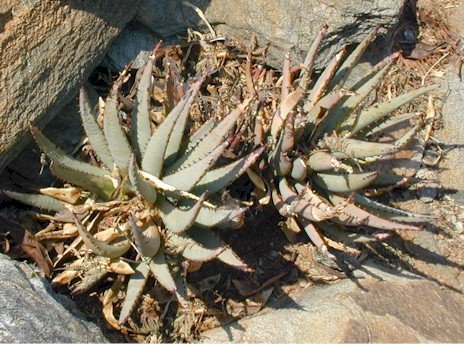
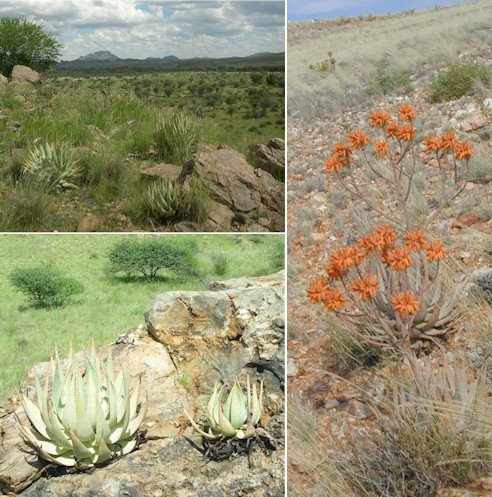
Aloe dichotoma and Aloe hereroensis in the southern Namibia. All endemic aloes are strictly protected in Namibia.
Namibia has only 2 seasons, a long hot summer and a short cold winter. It is now September which should be spring, but here that is no option. The dry heat is not as depressing as humid heat of tropical countries, but the hot day temperatures reach dangerous levels in the sun.
Namibia has 27 endemic aloe species. The habitat of some of these aloe species go over the borders into the neighbouring countries as plants do not grow inside political borders, but there are aloe species with a very small habitat inside Namibia only.
This was not a tour to see all the aloes of Namibia, but a quick trip up to Windhoek with a day trip to Swakopmund visiting family. It is a pity that time was short.
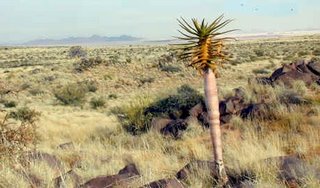
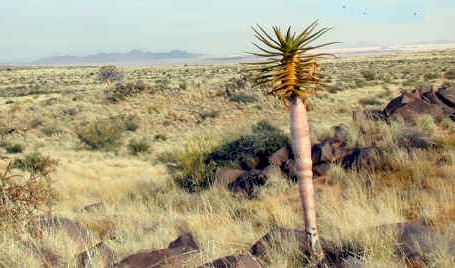
The dry semi-desert southern part of Namibia is the habitat of Aloe dichotoma.
It was exhilarating to find such a healthy young Aloe dichotoma tree. Very few seeds reach this stage. The photo below shows an old tree with dead branches - battle scars dealt out by nature.


An Aloe dichotoma garden with pelargoniums and mesembs at a petrol garage with Bed&Breakfast bungalows at the small town, Gruenau. It was a pleasant surprise to find the petunias in bloom protected by some reeds on the other side of the Aloe dichotoma garden. The dry hot day temperatures scorch anything that is green and yet here are these fragile flowers growing happily.
The distance from the border to Gruenau is 120 kilometres and to the next town Keetmanshoop is 146 kilometres. Few tourists do not stop for petrol here, which is just fine for al concerned in this lonely location. (petrol = gas in the USA)

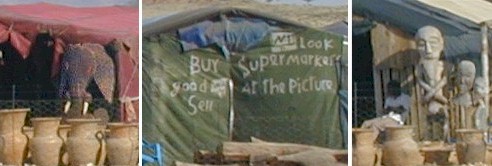
Informal shops catering for tourists, at the roadside opposite the Bed&Breakfast. Never be out in the midday sun over here. Note the barren mountains in the background.

The elephant is astonishingly realistic. I hope that the pile of hardwood for sale as well as the carved animals and figurines are from dead trees. Namibia has a very low supply of hardwood trees. The Camelthorn tree is very hardy but in a harsh climate it grows slowly.
The seedpods and seeds of most Acacia trees are edible and used as fodder for farm animals. (The wild herbivores appreciates it too). We saw many small stalls alongside the roads where people were selling bags of Acacia pods in the central parts of Namibia.
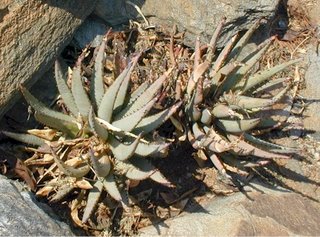
There are a few very special and rare aloes in the southern regions of Namibia. We did not have time to drive out to Aus but I would like to mention Aloe pachygaster. I took some photos of this aloe in the botanical garden in Windhoek.
Aloe pachygaster grows in the most harsh conditions in Namibia. Aus is the coldest place in this country with freezing winters, even snow. This should be good news to aloe enthusiasts in the cold countries. There is no need to bring Aloe pachygaster inside in winter but keep this aloe out of rain all year round. Water it sparingly in autumn only.
for more photos and tips
see my web site
Aloe hereoensis in bloom a few kilometers past Keetmanshoop on the way to Mariental.

Aloe hereroensis has a wide distribution throughout Namibia to the neighbouring countries. Photos below left were taken during the good rains in the beginning of the year 2006. Photo right were taken in September 2006 - the aloe plants are in bloom and the grass so green on the photo left are now dry with the seeds blown away by the wind.

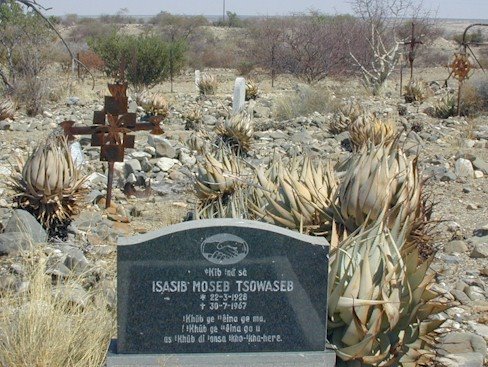
Aloe hereroensis in the old cemetery of Usakos. We expected them to be in flower, but although they showed some new growth, the rain was obviously not enough.